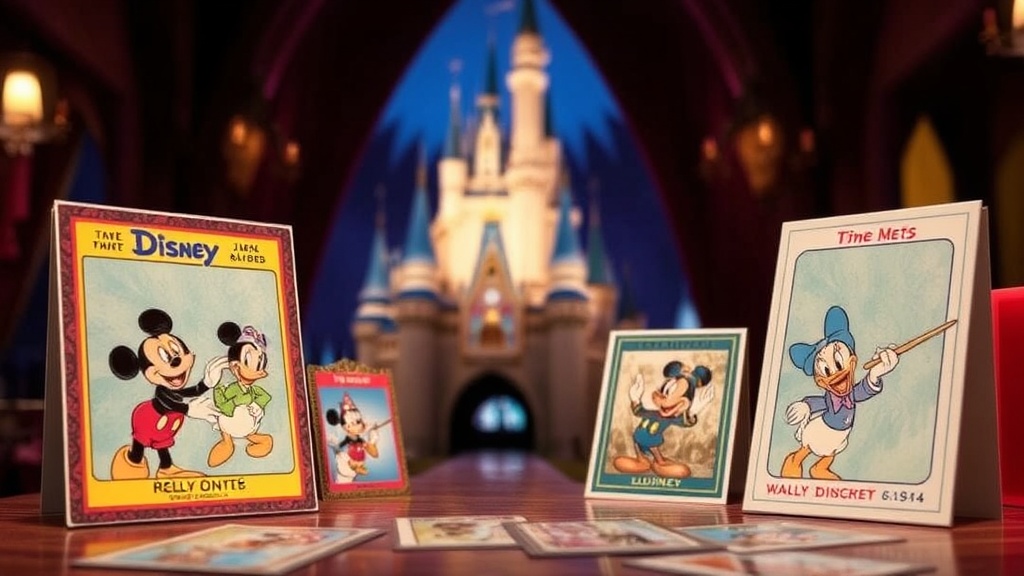
Vintage Disney Card Eras That Defined Collecting

The Hand-Painted Golden Era
The Mid-Century Animation Boom
The Digital Revolution and Holographic Era
This article breaks down the distinct eras of Disney trading card history, from the early cardboard sets to the high-end modern collectibles. You'll learn how to identify the different production styles, understand the market shifts between decades, and recognize which eras hold the most value for modern collectors.
The Early Era: Cardboard and Nostalgia (1930s - 1970s)
The early era of Disney card collecting is defined by simple cardboard stock and limited distribution through candy or cereal tie-ins. These weren't "collectibles" in the way we think of them today—they were often ephemeral items meant to be tossed away after the candy was eaten.
During this period, the focus was almost entirely on classic animation cells and character-driven art. You'll find sets featuring Mickey Mouse, Donald Duck, and Goofy in much simpler, flatter art styles than the high-gloss cards we see now. Because these items were printed on cheap cardstock, finding a "Mint" condition specimen is incredibly difficult. Most of these cards have rounded corners, discoloration, or even slight creases from kids playing with them.
Collectors looking for these pieces often rely on historical auction records to verify rarity. If you find an original 1950s-era Disney card, check the edges closely. They are much more fragile than modern products.
What Defines the Golden Age of Trading Cards?
The Golden Age is defined by the transition from simple promotional cards to high-quality, collectible trading card sets with specialized finishes. This era saw the rise of more sophisticated printing techniques and a focus on specific film releases.
In the 1980s and 90s, the hobby changed. We moved away from the "cheap toy" vibe and toward something collectors actually wanted to keep in binders. This was the era of the "Big Hits." We saw the introduction of holographic foils, textured surfaces, and even more complex die-cuts. It wasn't just about the character anymore; it was about the rarity of the card itself.
Key characteristics of this era:
- Increased use of foil stamping and metallic finishes.
- A shift toward licensed partnerships with major trading card companies.
- The introduction of "chase" cards (the rare ones everyone hunts for).
- Higher quality cardstock that survives better in humidity.
If you're just getting started, you might want to check out my previous post on the smart collector's guide to Disney trading cards. It helps you understand what to look for before you drop too much money on a set.
The Modern Era: High-End Collectibles and Digital Integration
The modern era is defined by premium materials, limited-edition runs, and the intersection of physical and digital collecting. We aren't just talking about cardboard anymore. We're talking about heavy stock, gold-leaf edges, and even high-end art cards that look more like miniature paintings.
Today, a Disney card might come in a premium box with a serial number on the back. This tells you exactly how many of that specific card exist in the world. It's a huge leap from the mass-produced cereal cards of the 70s. The market is now split between the casual fan and the serious investor. You'll see everything from standard retail sets to ultra-rare, hand-signed pieces that go for thousands of dollars at auction.
One thing to watch for is the rise of "Insert" cards. These are the cards tucked inside a standard pack that have a much lower pull rate. They often feature different textures or specialized art that isn't found in the base set. It's a bit of a gamble, but that's part of the fun.
| Era | Primary Material | Rarity Level | Main Collector Goal |
|---|---|---|---|
| Early Era (Pre-1980) | Thin Cardboard | High (due to survival) | Vintage/Historical Value |
| Golden Age (1980-2000) | Standard Cardstock | Moderate | Complete Set Completion |
| Modern Era (2010-Present) | Premium/Heavy Stock | Low (due to scarcity) | High-End Chase/Investment |
How Much Does a Vintage Disney Card Cost?
The cost of a vintage Disney card varies wildly based on its condition, its age, and the specific character featured. A common Mickey Mouse card from the 1950s might only be worth a few dollars, while a rare, high-grade set could go for hundreds or even thousands.
Condition is everything. In the world of collectibles, a single scratch or a soft corner can slash the value by 50% or more. This is why many serious collectors use professional grading services. If you're looking at a card that looks "perfect," it's worth verifying its authenticity. I've written about identifying authentic Disney trading card variations, which is a skill you'll need if you're buying vintage.
Here's the reality: the market for vintage Disney is much more niche than the market for baseball or Pokémon cards. You're often looking for "character collectors" rather than "card collectors." If you find a card from a defunct or extremely rare Disney short, the price can jump significantly. But don't expect a massive payout on every old card you find in an attic—most were never meant to last.
The Evolution of Art Styles
The art on these cards tells a story of how Disney's animation evolved. In the early days, the art was very much tied to the hand-drawn, ink-and-paint style of the era. It was simple and iconic. As we moved into the 90s, the art became much more detailed. The Renaissance era of Disney (think The Little Mermaid or Aladdin) brought a level of color and complexity that wasn't present in the earlier sets.
Modern cards often use digital art or high-resolution scans of actual animation cels. This gives them a very different "feel" than the hand-drawn look of the 1940s. Some collectors actually prefer the "flawed" look of the old hand-drawn cards—it feels more human. Others want the perfection of a modern, high-gloss digital card. There's no wrong answer, but it's a distinct divide in the community.
If you want to see the more intricate details of how to display these pieces, check out my guide on setting up a professional display. A good display can actually help preserve that art style for years.
The market for Disney cards is constantly shifting. What's a "chase card" today might be a common staple tomorrow. The key is to keep an eye on the production trends. Are they moving toward more digital-heavy sets? Are the physical cards getting thicker? Staying informed is the only way to keep up with this hobby.